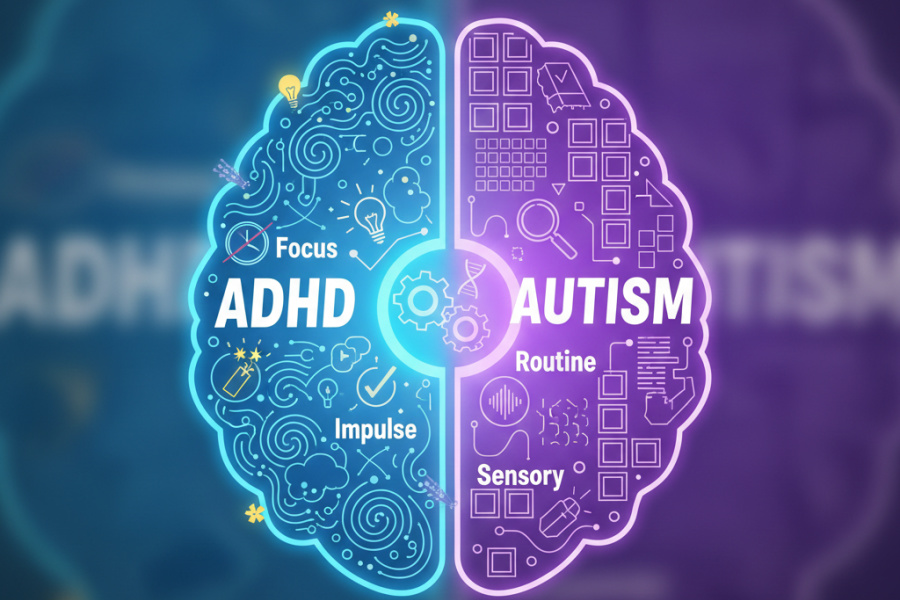
Welcome to the Global ADHD Network blog, offering news, resources, and tips for individuals with ADHD, the neurodiverse community, and those eager to learn.
ADHD is not about laziness or lack of effort. It is a neurodevelopmental condition affecting how the brain regulates attention, emotions, and actions. With understanding and evidence-based support, people with ADHD can thrive and reach their full potential.
ADHD in adults is a real and well-established condition that affects attention, organisation, impulse control, and emotional regulation. Recognising what ADHD looks like in adulthood is an important step toward diagnosis, effective management, and long-term success.
ADHD stands for Attention-Deficit/Hyperactivity Disorder, a well-established neurodevelopmental condition that affects attention, impulse control, and activity regulation. Understanding what ADHD stands for is an important first step toward awareness, accurate diagnosis, and effective support.
Public discussion around ADHD assessments, private care, and the use of payment plans such as Klarna has intensified in recent months. Much of this commentary, however, lacks clinical context and risks reinforcing outdated stigma around neurodiversity, financial behaviour, and access to healthcare.
ADHD is a neurodevelopmental condition defined by symptoms of inattention, hyperactivity, and impulsivity. These symptoms vary across individuals and can present differently in adults and women. Understanding the signs can support early identification and effective management.
Across the UK, waiting times for ADHD assessments have grown dramatically in recent years.In some areas, people face waits that last several years — with t
Dominic Harrison, professionally known as Yungblud, is an English singer, musician, and songwriter. He has a formal ADHD diagnosis and has spoken openly ab
Diagnosed with ADHD at ten, he recalls that he never meant to misbehave — he simply didn’t know how to cope with everything happening around him. His story